
Topic: Assessment / Evaluation
-
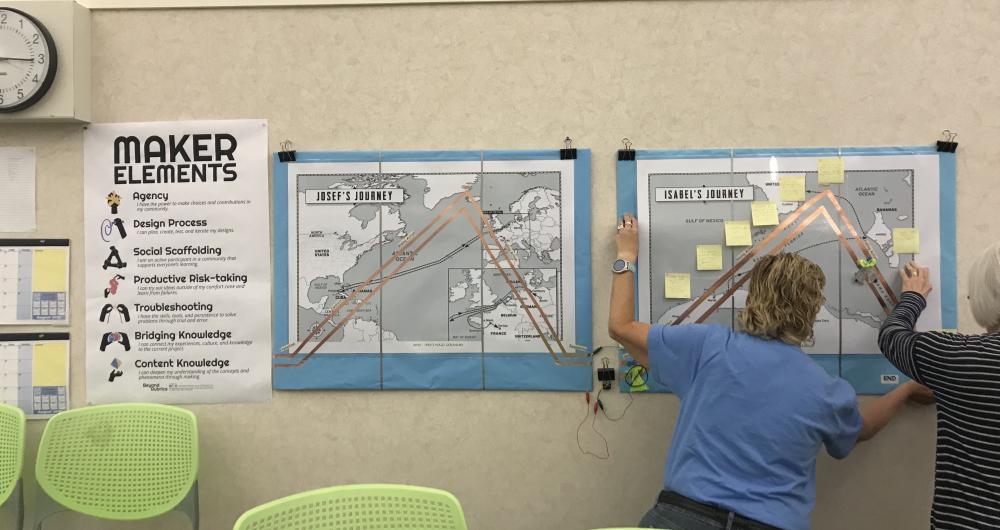
Beyond Rubrics Toolkit
While there are many benefits of making and makerspaces, one of the greatest challenges of implementing making in K–12 schools is the question of how to assess collaborative, cross-disciplinary, and iterative making practices and outcomes. The Beyond Rubrics Toolkit has embedded tools to capture evidence of the process of making. This toolkit is our first…
-
The Maker Educator Assessment Rubric
This rubric is designed for educators to identify where they are within stages of development along four categories of pedagogy: Goals, Planning Activities & Lessons, Planning Learning Progressions, Facilitation, and Development & Assessment.
-
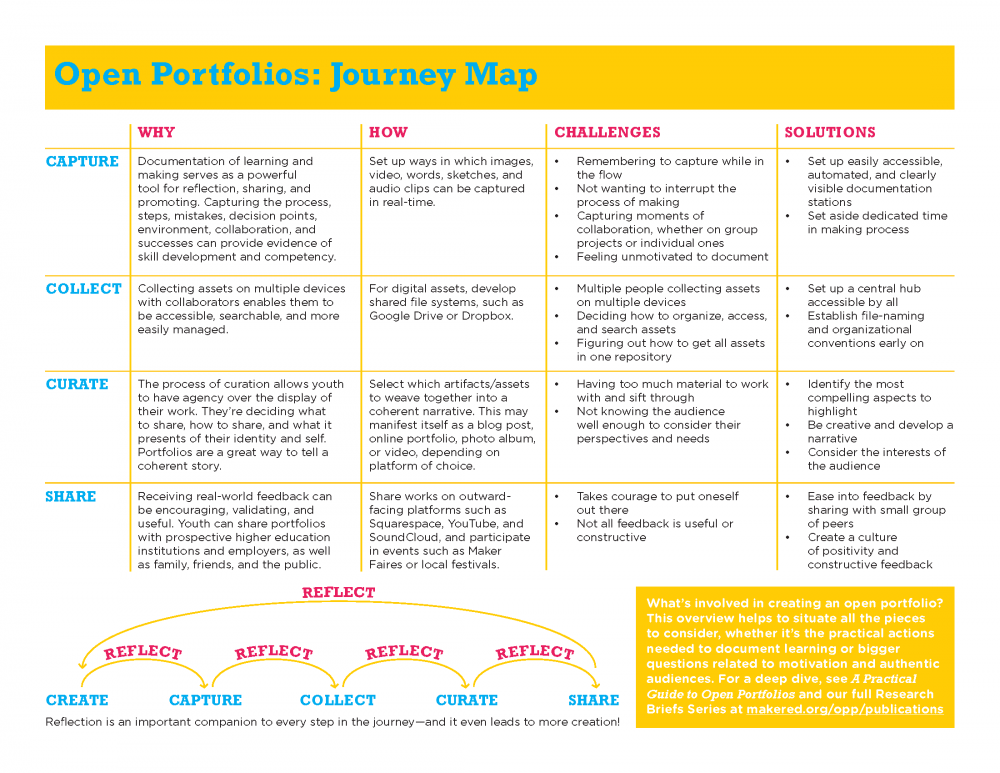
Open Portfolio Journey Map
What’s involved in creating an open portfolio? This overview helps to situate all the pieces to consider, whether it’s the practical actions needed to document learning or bigger questions related to motivation and authentic audiences.
-
Practical Guide to Open Portfolios
This guide distills some of the best practices for documentation and portfolio creation as a means of assessment in maker-centered learning environments
-
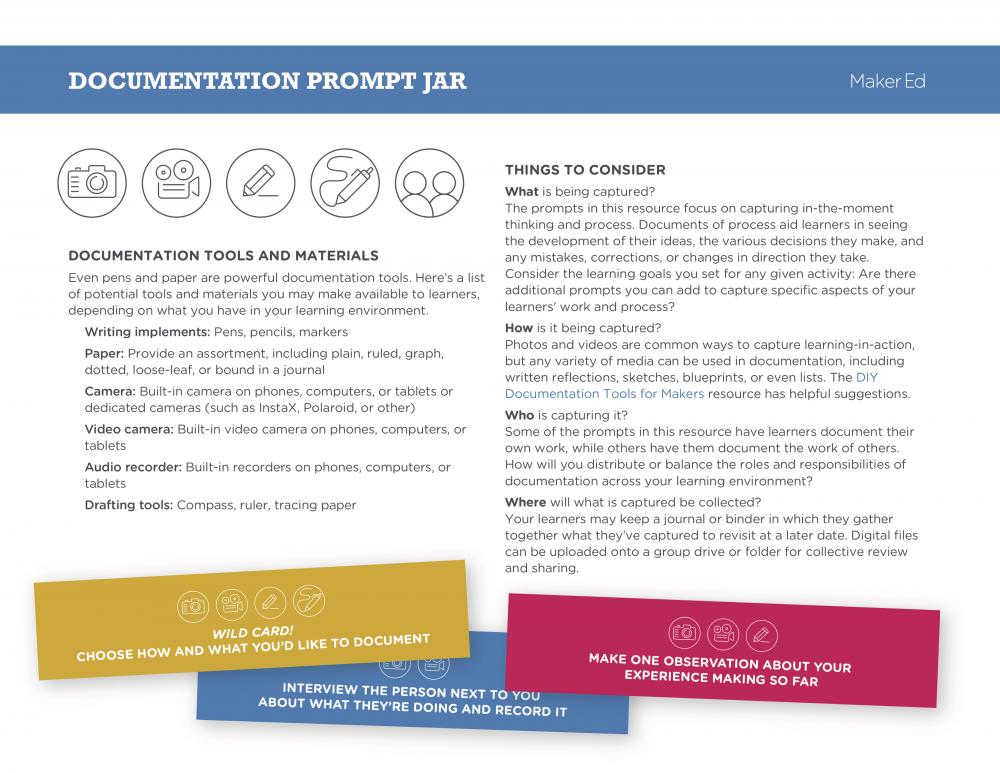
Documentation Prompt Jar
This collection of adaptable documentation prompts supports learners to capture their work, process, and experience while making and learning.
-
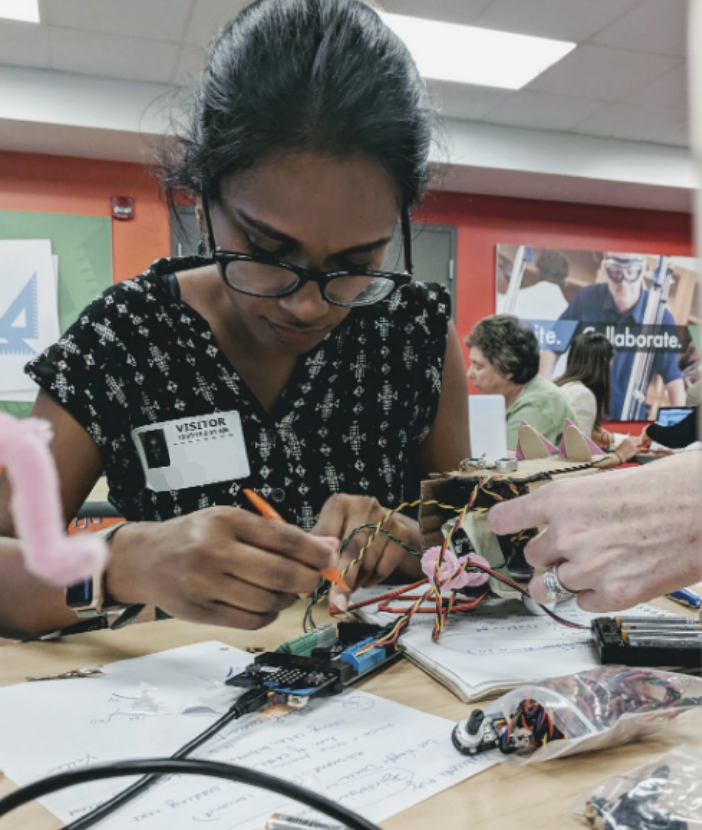
Hummingbird Computational Thinking (CT) Assessment Guide
This guide, which includes a glossary and a formative assessment tool, supports educators to understand and identify the computational thinking mindset.
-
Project Zero’s Thinking Routine Toolbox
A thinking routine is a set of questions or a brief sequence of steps used to scaffold and support student thinking. This toolbox highlights Thinking Routines developed across a number of research projects at Project Zero.
-
A Pathway to Equitable Math Instruction
A toolkit offers an integrated approach to mathematics that centers Black, Latinx, and Multilingual students in grades 6-8, addresses barriers to math equity, and aligns instruction to grade-level priority standards. It offers guidance and resources for educators to use now as they plan their curriculum, while also offering opportunities for ongoing self-reflection as they seek…
-
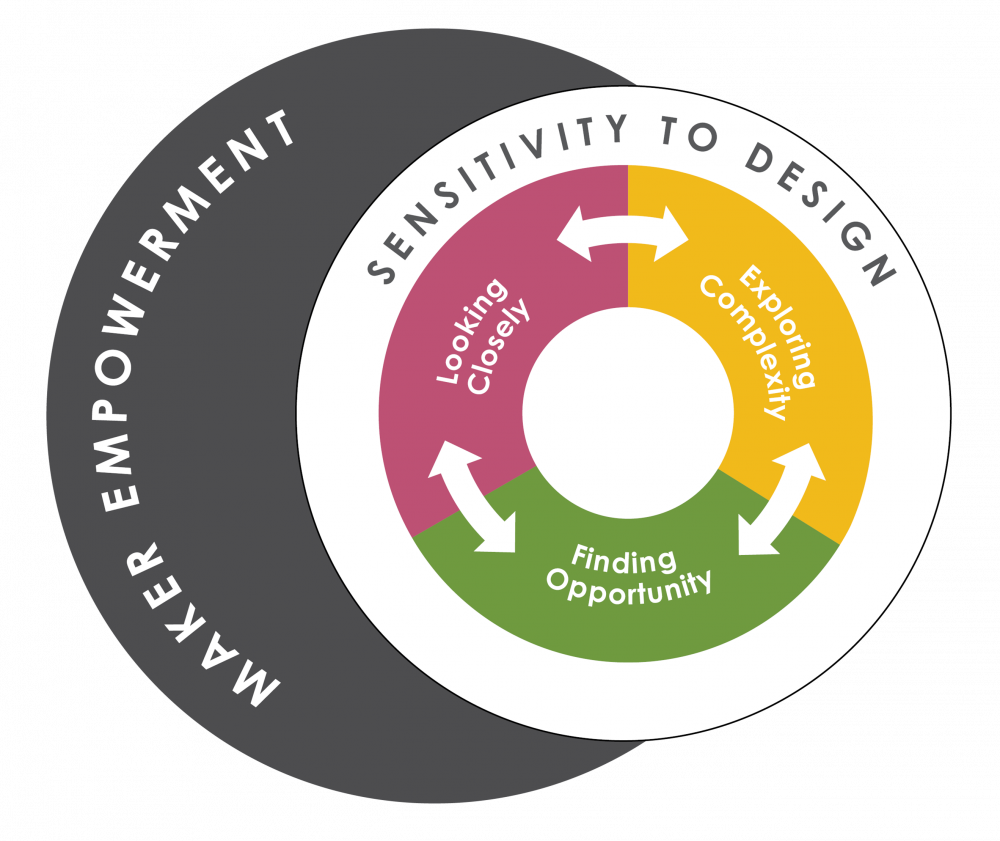
The Framework for Maker-Centered Learning
This framework describes three interrelated capacities that help learners develop a sensitivity to design and a set of observable “moves” that educators can use to help design maker-centered learning experiences, and to support, observe, document, and assess maker-centered learning.
-
Making in Action: Observation Tools
This set of three observation tools supports learners and educators to identify and assess the moves and indicators of maker-centered learning, including looking closely, exploring complexity, and finding opportunity.